Program Overview
For most of history, wands were made by hand, by feel, and by families who did not share their methods. The results were beautiful, inconsistent, and occasionally flammable. The B.S. in Wand Engineering exists to bring modern engineering discipline to the most personal instrument in magical practice.
Housed in the School of Arcane Engineering, the program teaches students to design, fabricate, and certify wands and other handheld focusing instruments with measurable, repeatable performance. Students study wood science, core materials, thaumic optics, and human factors, then apply them to real devices built for real users, including left-handed practitioners, older adults with arthritis, and practitioners with limb differences.
The program is one of only three accredited wand engineering degrees in the United States, and the only one that does not require students to be chosen by their instruments.
What You'll Learn
Core competencies include:
- Materials selection. How grain, density, and moisture content affect focus, and why the provenance of a core material matters ethically and legally.
- Thaumic optics. Modeling how a wand collects, concentrates, and directs an input signal, and measuring beam coherence in the lab.
- Precision fabrication. Hand and CNC lathe techniques, binding, and finishing to tolerances of a tenth of a millimeter.
- Human factors. Grip ergonomics, fatigue, and accessibility, including adaptive designs for users with limited dexterity.
- Safety and standards. Misfire investigation, recall procedures, and the voluntary consensus standards that govern handheld devices in 38 states.
Hands-On Learning
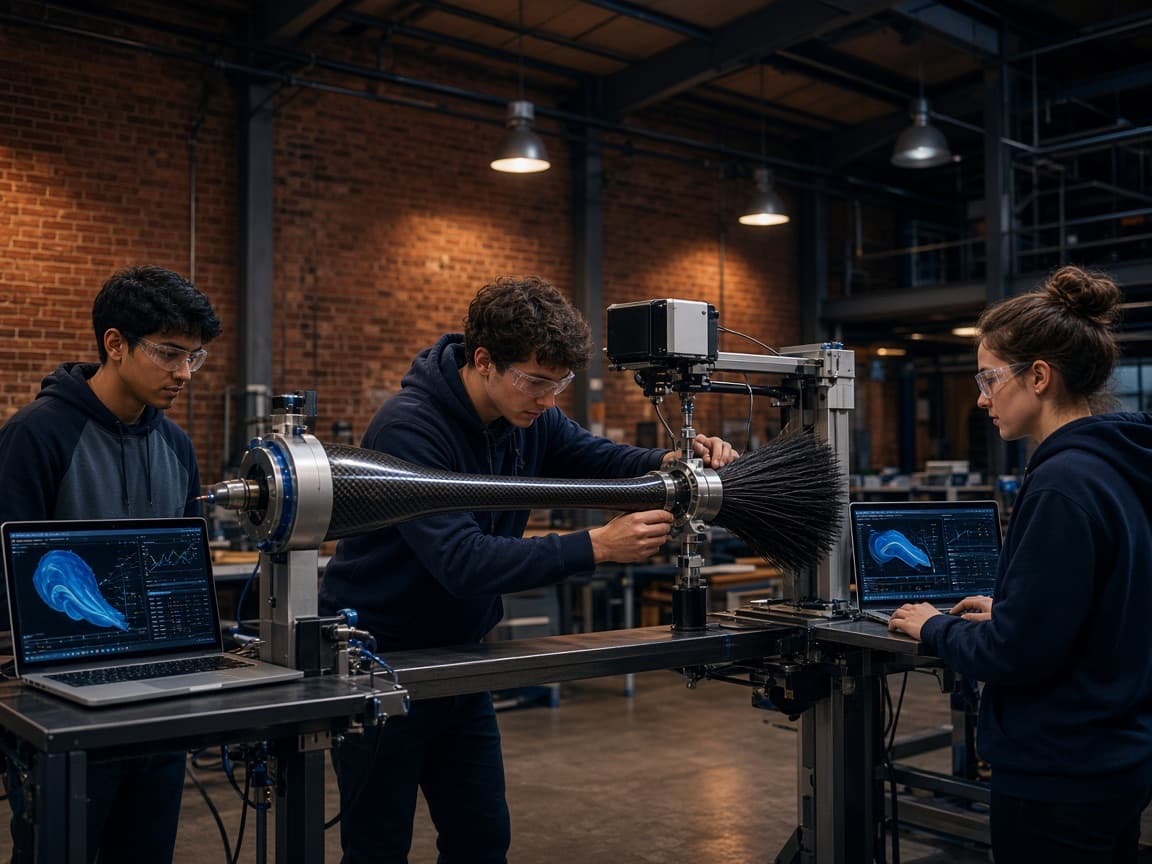
The Wand Fabrication Studio features twelve enchanted lathes, a kiln-drying room, a curated library of more than 400 sustainably sourced wood species, and an optical bench for beam-coherence testing. A misfire containment booth is available for testing prototypes and, occasionally, for grading.
Students complete at least one internship, typically with an established wandwright, a handheld device manufacturer, or an adaptive-technology nonprofit. Seniors spend their final year on a capstone designed around a named client. Recent projects include a weighted training wand for a pediatric occupational therapy clinic and a heat-resistant focus for the handlers in Menagerie Hall.
Admission Requirements
Apply through The Common Scroll or the Fablehurst Application and select Wand Engineering. We look for applicants with strong preparation in mathematics and physical science and, ideally, some experience making things with their hands: woodworking, robotics, jewelry, or instrument repair all count.
Students without magical ability can complete every requirement of the major; instruments are tested with a calibrated signal source rather than a live practitioner. Portfolios are welcome but optional.
Frequently Asked Questions
Do I get to keep the wands I make?
Yes, once they have passed inspection. Instruments that fail misfire testing are retained by the studio for teaching purposes and appear in a small, well-ventilated display case.
Is this a good path to graduate school?
Many graduates continue to the M.S. in Portal Systems Engineering or to materials science programs. Others enter industry directly, where demand for certified technicians outpaces supply.
Who teaches in the program?
Courses are taught by full-time faculty and practicing wandwrights, under the leadership of Dean Dr. Ngozi Hartwell. Request information to arrange a studio visit during your campus tour.
Sample Courses
| Course | Title | Credits |
|---|---|---|
| AENG 101 | Introduction to Arcane Engineering Design | 4 |
| AENG 205 | Dendrology and Enchantable Woods | 4 |
| AENG 231 | Core Materials: Selection, Ethics, and Sourcing | 3 |
| AENG 258 | Signal Focusing and Thaumic Optics | 4 |
| AENG 320 | Ergonomics and Human-Instrument Interaction | 4 |
| AENG 352 | Precision Fabrication and Lathe Enchantment | 4 |
| AENG 418 | Misfire Analysis and Device Safety Standards | 3 |
| AENG 494 | Wand Engineering Capstone | 6 |
See the full Course Catalog for descriptions and prerequisites.