Program Overview
A griffin with a fractured primary feather. A familiar whose bond with its owner has begun to fray. A lake creature of indeterminate size exhibiting mild lethargy. Veterinary thaumaturges are the clinicians called when an animal's illness involves magic — and in a world where so many animals do, demand for them has never been greater.
The Doctor of Veterinary Thaumaturgy (D.V.T.) is a four-year professional degree offered by the School of Magical Zoology & Veterinary Thaumaturgy. It is one of only six accredited D.V.T. programs in the United States, and the only one with a teaching hospital housed inside a working menagerie. Each fall we enroll a class of 64 students.
What You'll Learn
The curriculum follows the structure of a conventional veterinary degree, expanded to address magical physiology, pathology, and therapeutics.
Years 1–2: Preclinical sciences. Anatomy, physiology, microbiology, pathology, and pharmacology, taught across both magical and non-magical species. Students learn to perform physical examinations on everything from common familiars to hippogriffs, and complete coursework in potion therapeutics taught jointly with the School of Alchemical & Potionary Sciences.
Year 3: Clinical sciences. Surgery, anesthesia, internal medicine, diagnostic imaging (including scrying techniques developed with the School of Divination), and zoonotic curse management.
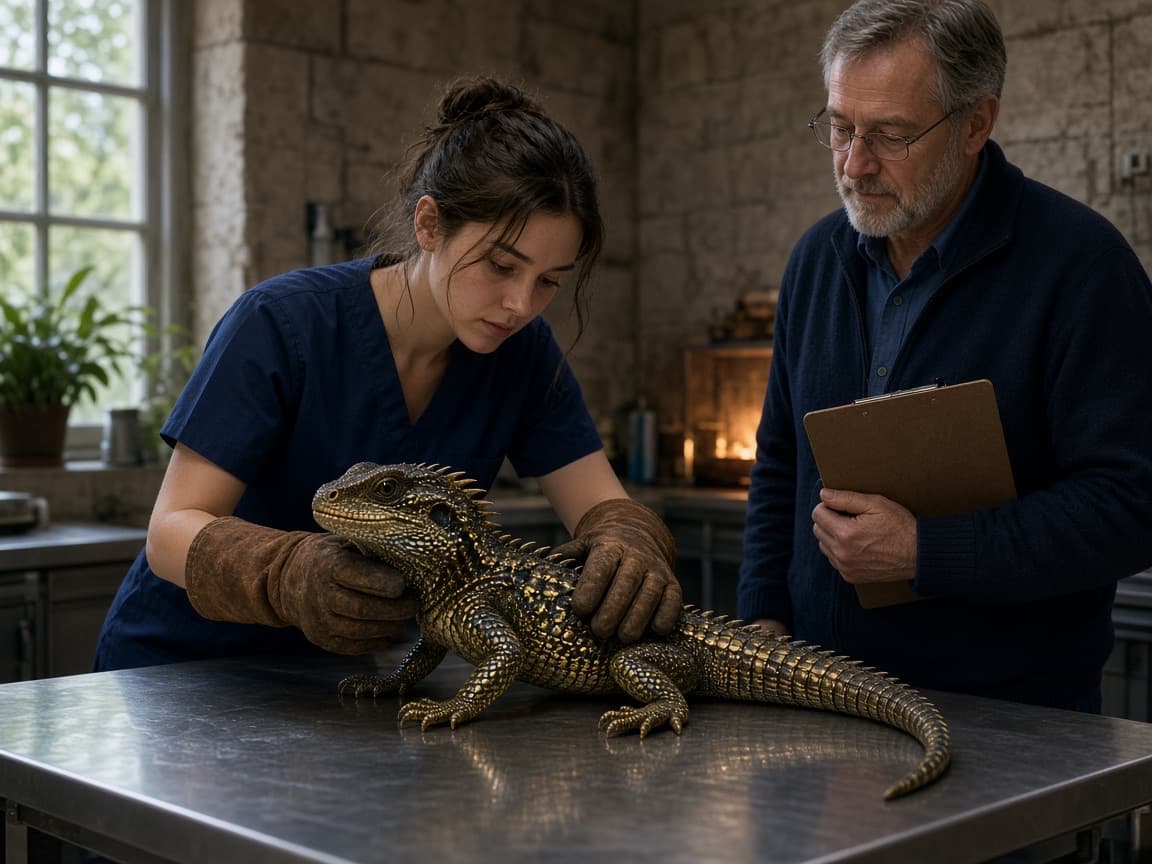
Year 4: Clinical rotations. Twelve months of full-time rotations through the Menagerie Hall Teaching Hospital's services — small companion and familiar medicine, large animal, avian and winged species, draconic medicine, emergency and critical care, and aquatic and cryptid medicine — plus two externships at approved practices or sanctuaries.
Hands-On Learning
Clinical training begins in the first year, when students join the hospital's familiar wellness clinic, which provides low-cost care to animals belonging to Hollowmere residents. By graduation, each student will have participated in the care of more than 1,200 patients across at least 40 species.
Students in the draconic medicine rotation work under Dr. Imogen Faraday-Lund, and all students complete a public health rotation with Dean Tobias Wren, focusing on curses and enchantments that pass between species.
Admission Requirements
Applicants must hold, or expect to hold by matriculation, a bachelor's degree with the following prerequisites completed with a grade of C or better:
- Two semesters each of biology, general chemistry (or alchemical sciences), organic chemistry, and physics, all with labs
- One semester each of biochemistry and statistics
- At least 500 hours of documented animal experience, including a minimum of 100 hours with magical species
Applications are submitted through the Veterinary Thaumaturgy Centralized Application Service (VTCAS). The deadline for fall 2027 entry is October 15, 2026. Selected applicants are invited to interview in January. A minimum GPA of 3.2 is recommended; the GRE is not required. For more on the process, visit Graduate Admissions.
Frequently Asked Questions
Can non-magical students become veterinary thaumaturges?
Yes. Many of the program's techniques rely on instrumentation and prepared therapeutics rather than personal ability, and non-magical graduates practice successfully across the country. Some advanced procedures are performed in teams.
Does the program treat non-magical animals?
Yes. Graduates are trained and licensed to treat all domestic species, and the curriculum includes full coverage of conventional veterinary medicine.
How much does the program cost?
Professional tuition and fees are published on the Tuition and Costs page. Most students finance their education through federal loans, school scholarships, and the Menagerie Service Loan Repayment Program; see Financial Aid.
Sample Courses
| Course | Title | Credits |
|---|---|---|
| ZOOL 801 | Thaumaturgic Anatomy and Physiology I | 6 |
| ZOOL 802 | Thaumaturgic Anatomy and Physiology II | 6 |
| ZOOL 815 | Pharmacology and Potion Therapeutics for Magical Species | 4 |
| ZOOL 830 | Diagnostic Imaging and Scrying | 4 |
| ZOOL 850 | Surgery of Large and Winged Species | 5 |
| ZOOL 870 | Clinical Rotations: Menagerie Hall Teaching Hospital | 12 |
| ZOOL 890 | Zoonotic Curses and Public Health | 3 |
See the full Course Catalog for descriptions and prerequisites.