Program Overview
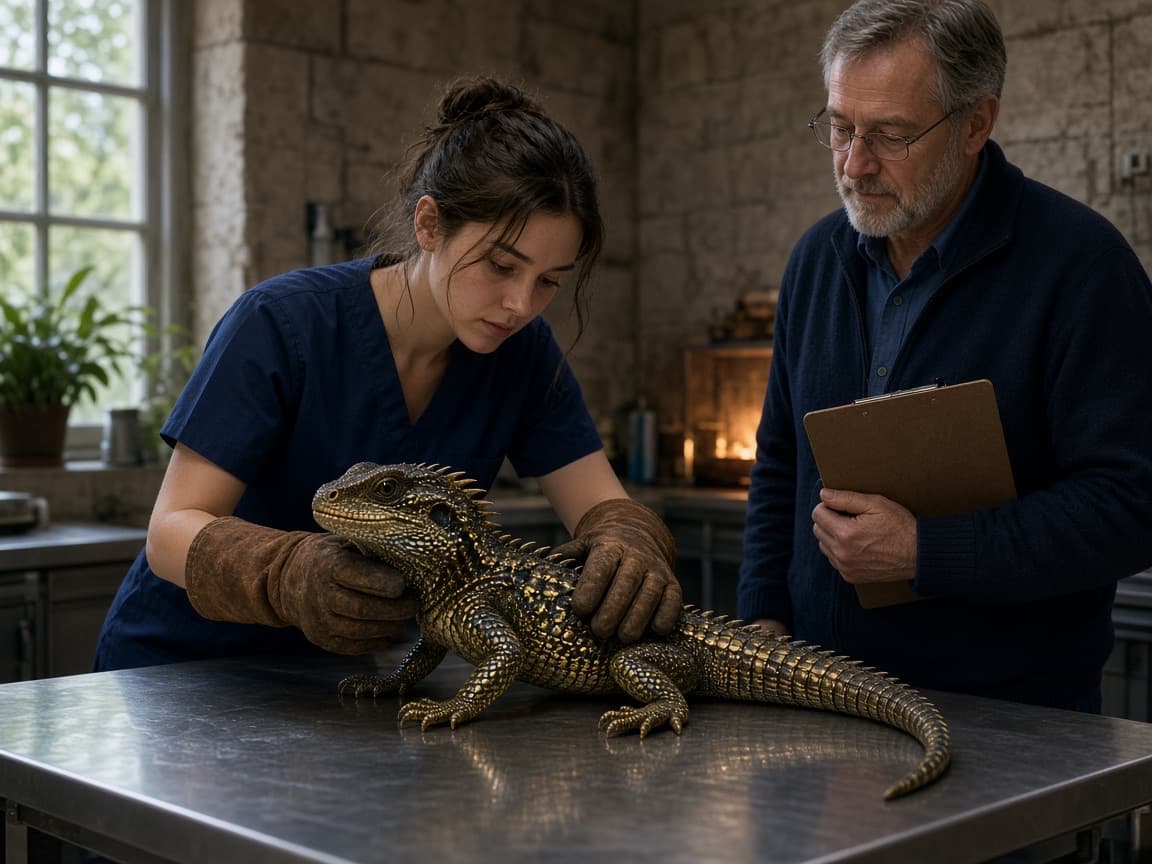
In June 2026, a clutch of Ironscale eggs incubated at Menagerie Hall produced the first captive-born Ironscale dragon in North America in 38 years. Four undergraduate Draconic Studies majors were in the room. It was, as one of them put it, "the single loudest morning of my life, and the best."
The Bachelor of Science in Draconic Studies is the only undergraduate program in the United States devoted entirely to dragons. Offered by the School of Magical Zoology & Veterinary Thaumaturgy, it prepares students for careers caring for, studying, and protecting some of the most remarkable — and most thermally demanding — animals on Earth. Read more about the Ironscale hatching.
What You'll Learn
The major shares a first-year foundation with the B.S. in Magical Zoology, then narrows to dragons and closely related species, including wyverns and drakes. Coursework covers:
| Area | What students study |
|---|---|
| Physiology | Flame glands, thermoregulation, flight mechanics, and scale composition |
| Behavior | Territoriality, courtship, clutch care, and hoarding |
| Communication | Vocalization, posture, and the emerging field of draconic linguistics |
| Husbandry | Nutrition, enclosure design, enrichment, and handling |
| Conservation | Population status, habitat loss, and international trade regulation |
Every major takes ZOOL 245, Fire Safety and Protective Equipment, before any direct contact with dragons. The course is pass/fail and must be repeated each year.
Hands-On Learning
The draconic wing of Menagerie Hall houses nine adult dragons representing five species, plus the recently hatched Ironscale and her keepers. Beginning in the sophomore year, students complete the Draconic Husbandry Practicum, working in rotating shifts alongside professional keepers.
The dragons also heat the building. Under the university's Dragonfire Heat Recovery initiative, thermal output from the draconic wing will supply a growing share of campus heating by 2035, and Draconic Studies students assist engineering researchers in monitoring output and animal welfare.
Students are mentored by Dr. Imogen Faraday-Lund, whose research on draconic thermoregulation has been cited in every major husbandry manual published since 2019, and whose eyebrows are regrowing well.
"The first time you feed a dragon, you understand why we train for two years first. The second time, you understand why it's worth it." — Priya Delacroix '28, Draconic Studies major
Admission Requirements
Students apply through the standard first-year application. Because the major involves physically demanding work, students must be able to wear up to 30 pounds of flame-resistant protective equipment for shifts of up to four hours, with reasonable accommodations available through the Office of Accessibility Services. See our accessibility statement for more information.
Strong high school preparation in biology, chemistry, and mathematics is recommended. Prior experience with large animals is valued.
Frequently Asked Questions
When will I first work with a dragon?
Students observe dragons from the first semester and begin supervised hands-on work in the spring of their sophomore year, after completing ZOOL 245 and a species-specific handling assessment.
Is it dangerous?
Working with dragons carries inherent risks, which is why our safety training is among the most rigorous at any university. The program has not recorded a serious injury to a student since 2011. Minor singeing is documented and reviewed.
Do I need special insurance?
No. Students in the practicum are covered by the university's supplemental field-work policy at no additional cost.
Sample Courses
| Course | Title | Credits |
|---|---|---|
| ZOOL 150 | Introduction to Draconic Studies | 4 |
| ZOOL 220 | Draconic Physiology and Thermoregulation | 4 |
| ZOOL 245 | Fire Safety and Protective Equipment | 2 |
| ZOOL 310 | Hoarding Behavior and Resource Economics | 3 |
| ZOOL 335 | Draconic Husbandry Practicum | 4 |
| ZOOL 360 | Draconic Vocalization and Communication | 3 |
| ZOOL 480 | Senior Research in Draconic Studies | 4 |
See the full Course Catalog for descriptions and prerequisites.