Research
Fablehurst Commits to Carbon-Neutral Campus by 2035 Through Dragonfire Heat Recovery
A new $86 million plan will capture waste heat from Menagerie Hall's resident dragons to warm campus buildings, anchoring a 2035 carbon-neutrality pledge.
By Office of University Communications · · 4 min read
HOLLOWMERE, Vt. — Fablehurst University will become carbon neutral by 2035, powered in large part by a first-of-its-kind system that recovers waste heat from the dragons housed at Menagerie Hall, President Aurelia Thornquist announced Wednesday.
The $86 million Dragonfire Heat Recovery initiative, developed jointly by the School of Arcane Engineering and the School of Magical Zoology & Veterinary Thaumaturgy, will route thermal energy from the building's draconic wing into the campus district heating loop. University engineers project it will eliminate 61 percent of the campus's direct (Scope 1) greenhouse gas emissions by 2029, when the system reaches full capacity.
"For three centuries, we have treated the heat produced by our dragons as something to be managed, ventilated, and, on two occasions, extinguished by the Hollowmere Volunteer Fire Department," Thornquist said. "Starting today, we are going to treat it as what it is: a renewable resource with a long lifespan and strong opinions."
How the system works
Menagerie Hall currently houses 11 adult and juvenile dragons across four species as part of the university's research and conservation mission. A healthy adult dragon at rest emits between 180 and 400 kilowatts of thermal energy, much of it released through routine exhalation during sleep. Until now, that heat has been vented through the building's roof via a system of ceramic flues installed in 1911.
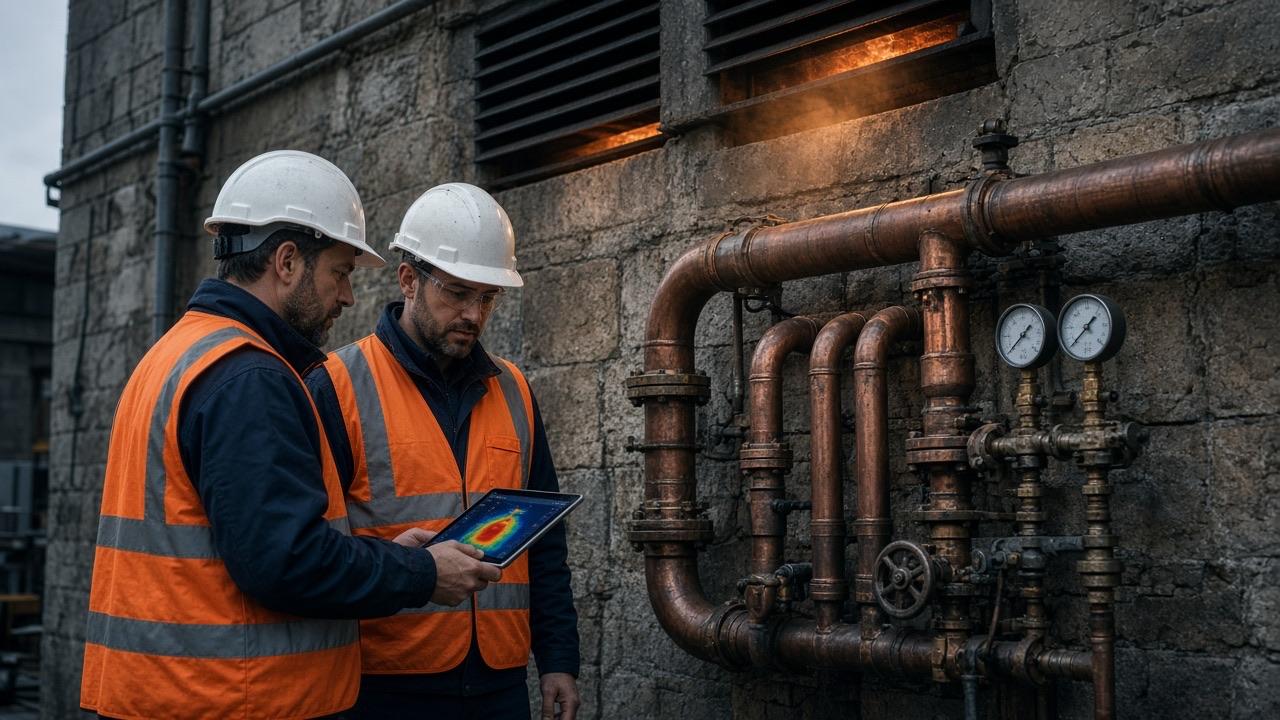
Under the new design, those flues will be replaced with a network of enchanted copper heat exchangers that capture thermal output at the source and transfer it to a glycol-and-brine loop beneath the building. From there, heat will be pumped through 3.2 miles of new and upgraded underground piping to 38 campus buildings, including all four residential colleges, the Great Refectory, and Wickham Memorial Library's above-ground floors.
"What makes this interesting from an engineering standpoint is not the temperature — it's the variability," said Dr. Ngozi Hartwell, Dean of the School of Arcane Engineering, whose team designed the heat-exchange system. "A natural gas boiler does not have REM cycles. A dragon does. We've built in thermal storage capacity so that the Oakenshaw kitchens stay warm even when a Frostback Drake is having an unsettled night."
The system includes a 1.4-million-gallon insulated thermal reservoir beneath the Verdance Conservatories, allowing the university to store surplus heat from summer months for use during Vermont winters, when heating demand peaks and dragons, like many faculty, prefer to hibernate.
Animal welfare at the center
University officials emphasized that the dragons will not be required to produce additional heat, and that no changes will be made to their diets, sleep schedules, or enclosures to increase output.
"Our first obligation is to the animals," said Dr. Tobias Wren, Dean of the School of Magical Zoology. "This system captures heat that our dragons were already producing and releasing into the Vermont sky. Nobody is being asked to breathe harder. The protocol was reviewed and approved unanimously by the Institutional Creature Care and Use Committee, including our two draconic observers, who asked only that the new flues be quieter than the old ones."
The system will be monitored by veterinary staff around the clock. Sensors in each enclosure will automatically divert heat away from the capture loop if an animal's core temperature, respiration, or mood indicators fall outside normal ranges.
Dr. Imogen Faraday-Lund, Associate Professor of Draconic Studies, noted that the project has already produced unexpected research benefits. "Continuous thermal monitoring gives us the most detailed dataset on draconic metabolism ever collected," she said. "We're learning a great deal about how these animals regulate heat. I am also learning, personally, to stand further back."
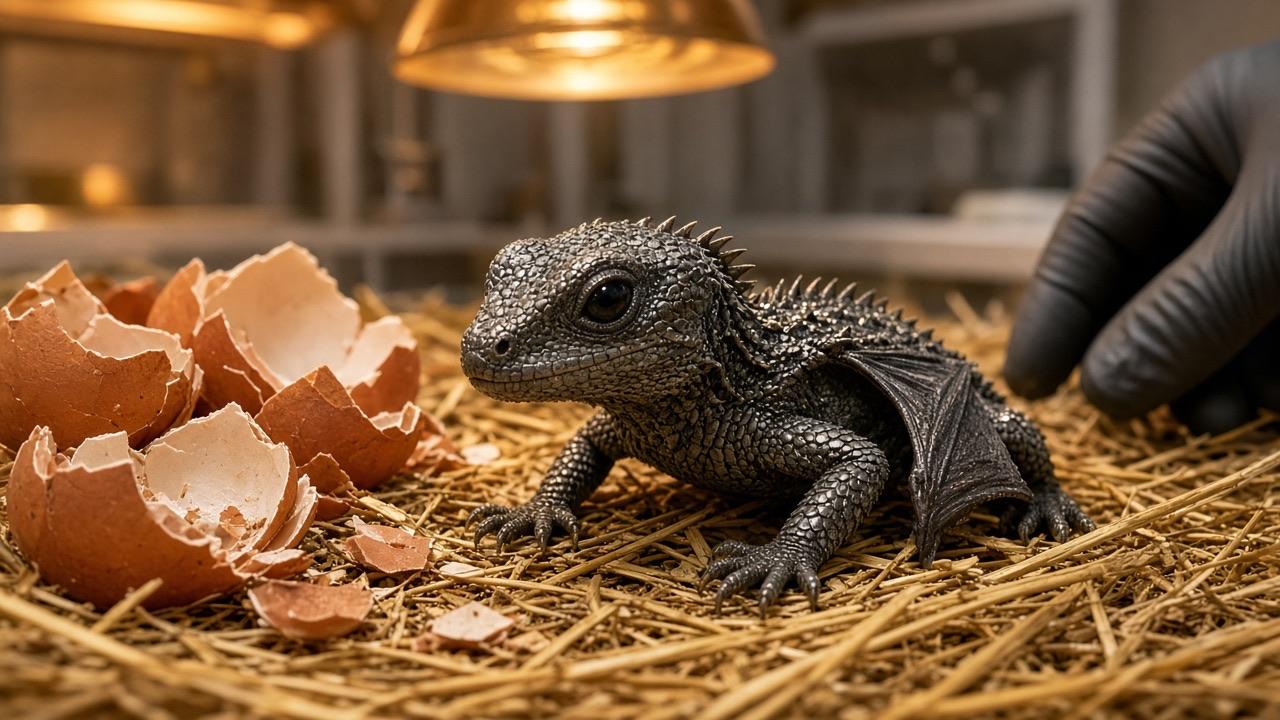
The university's newest resident — the Ironscale hatchling born in June — will not be connected to the heating loop. "She's four weeks old," Wren said. "She's not contributing to anything except our collective sense of wonder."
Students on the front lines
More than 40 undergraduate and graduate students have worked on the project, many through the M.Eng. in Enchanted Infrastructure and the B.S. in Draconic Studies.
"I came to Fablehurst thinking I'd design bridges," said Ines Malabanan '27, an Arcane Engineering major who spent the summer modeling heat flow through the new manifold. "Now I spend my days calculating the thermal output of a sleeping Ember Wyrm and making sure it can heat a dormitory without melting the pipes. It's the most practical thing I've ever done, and I've done a lot of problem sets."
Graduate student Oluwaseun Park, a Draconic Studies researcher, leads the student team that tracks animal behavior during installation. "The dragons have been remarkably tolerant of the construction," Park said. "One of them has started sleeping directly on top of the new manifold. We've chosen to interpret that as approval."
Timeline and funding
The initiative will proceed in three phases:
- Phase 1 (2026–2028): Replacement of Menagerie Hall flues, installation of heat exchangers, and construction of the thermal reservoir.
- Phase 2 (2028–2029): Connection of 38 buildings to the upgraded district loop, including the new Quill Center for Healing Arts, scheduled to open in 2028.
- Phase 3 (2029–2035): Retirement of the campus's remaining fuel-oil boilers, expanded solar installations on the Lantern Quad rooftops, and electrification of the university vehicle and broom fleets.
The project is funded through a combination of green revenue bonds, a $22 million gift from the Ashcombe Family Foundation, and anticipated savings of approximately $3.1 million per year in fuel costs. Remaining emissions will be addressed through verified forest-carbon offsets in the Green Mountains, including on portions of the Lunar Acreage, "subject to lunar availability."
With the commitment, Fablehurst joins more than 400 U.S. colleges and universities that have set public carbon-neutrality targets, and becomes, to the university's knowledge, the only one whose plan requires a veterinary consult.
Learn more about sustainability efforts and faculty research at Fablehurst Research.
- sustainability
- research
- dragons
- engineering
- climate