Admissions
How to Choose a Major at a Magical University: A Guide for Prospective Students
Fablehurst offers 16 undergraduate majors across eight schools. Here's when to declare, how to explore, and what to ask as you choose your path.
By Office of Undergraduate Admissions · · 5 min read

Choosing a major is one of the most exciting decisions you'll make in college — and at a university where you can study everything from potion pharmacology to portal-adjacent broom engineering, it can also feel overwhelming. The good news: you don't have to decide before you arrive, and at Fablehurst you'll have plenty of support when you do.
This guide explains how majors work at Fablehurst University, when you need to declare, and how to find the program that fits your interests and goals.
Do I need to choose a major before I apply?
No. The Common Scroll and the Fablehurst Application both ask about your academic interests, but your answer is not binding. About 38% of each entering class applies as "undecided," and admissions counselors read those applications exactly the same way as any other.
There are a few exceptions. Students interested in the following programs should indicate that interest on their application, because the curriculum begins in the first semester:
- Nursing & Healing Arts (B.S.N.) — a direct-entry program with a clinical sequence that starts in year one
- Arcane Engineering, Aerial Vehicle (Broom) Engineering, and Wand Engineering — which share a common first-year engineering core
- Draconic Studies — which requires a first-year fire-safety certification sequence
Students can still transfer into these programs after arriving, space permitting.
When do Fablehurst students declare a major?
Most students formally declare by March 31 of their second year. Until then, you'll take courses in the Fablehurst Core — a set of requirements in writing, quantitative reasoning, arcane history, the natural sciences, and ethics — while exploring subjects that interest you. Most bachelor's degrees require 128 credits.
How many majors does Fablehurst offer?
Fablehurst offers 16 undergraduate majors across eight schools, plus six certificates that many undergraduates add alongside their degree. Here's how to think about them by interest:
| If you're drawn to... | Consider |
|---|---|
| Lab science, chemistry, medicine | Alchemical Sciences, Potion Pharmacology |
| Creative work, art, and writing | Illusion & Visual Arts, Mythic Literature |
| History, culture, and theory | Arcane History, Charms & Enchantment |
| Data, statistics, and forecasting | Divination & Predictive Analytics, Astronomancy |
| Animals and conservation | Magical Zoology, Draconic Studies |
| Building things | Arcane Engineering, Wand Engineering |
| Law, policy, and argument | Legal Studies & Oathcraft |
| Business and leadership | Enchanted Enterprise (B.B.A.) |
| Caring for people | Nursing & Healing Arts |
Browse every program, including graduate degrees and certificates, in our program directory, or read detailed course descriptions in the course catalog.
How should I narrow down my options?
Start with what you already love
Look at the classes, books, and projects that have held your attention longest. A student who spends weekends rehabilitating injured owls may find a home in Magical Zoology; one who reorganizes the family grimoire into a spreadsheet might thrive in Predictive Analytics.
"Students sometimes think they need to pick the most impressive-sounding major," said Dr. Philippa Marchbanks, dean of the College of Enchantment & Charms. "The students who do best are the ones who pick the thing they would read about even if no one assigned it."
Be honest about the day-to-day
Every major has a rhythm. Astronomancy includes required late-night observation sessions at Starfell Observatory. Draconic Studies involves early-morning feeding rotations at Menagerie Hall and a meaningful amount of protective equipment. Potion Pharmacology labs run in three-hour blocks, and brews cannot be left unattended.
"Lab courses in our school are demanding, and we are upfront about that," said Dr. Hana Okonkwo-Price, associate professor of Potion Pharmacology. "But the students who love the work find the long afternoons in the lab are exactly where they come alive. Also, the fume hoods are excellent."
Look at outcomes — but not only outcomes
Every program page lists career paths and outcomes data. These are useful, but they aren't everything. Fablehurst graduates in every major go on to careers in fields that didn't exist when they enrolled.
Try it before you commit
Take an introductory course in a subject you're curious about during your first year. Most 100-level courses are open to all students and count toward Core requirements.
Can non-magical students major in anything?
Yes. All 16 undergraduate majors are open to non-magical students, and non-magical students graduate in every one of them each year. Some programs, including Wand Engineering, include alternative lab sequences focused on design, materials, and testing rather than personal casting.
"Designing a wand and using one are different skills," said Dr. Kenji Albright, associate professor of Aerial Vehicle Engineering. "Some of our strongest engineering students have never cast anything in their lives. They just understand the load paths." Students who need accommodations can learn more through Accessibility.
Can I double major or add a minor?
Yes. About 22% of Fablehurst undergraduates complete a double major, and minors are available in most departments. Popular combinations include Mythic Literature with Legal Studies & Oathcraft, and Magical Zoology with the Certificate in Familiar Care & Bonding.
"I came in planning to do Alchemical Sciences, took Arcane History to fill a Core requirement, and now I'm doing both," said Wesley Adeyemi-Hart '28, a double major in Tidecrest College. "My adviser told me that happens all the time. She was right."
Frequently Asked Questions
Is it hard to change majors?
Not usually. Students change majors all the time, especially in the first two years. Your academic adviser and your residential college dean will help you map out how your completed credits apply to a new program.
Will I have an academic adviser from day one?
Yes. Every first-year student is assigned a faculty adviser and a residential college adviser before classes begin. Once you declare, you'll also be assigned an adviser in your major.
Does my major affect my residential college assignment?
No. Residential colleges are assigned by the Matriculation Lottery, and every college includes students from every major.
What questions should I ask on a campus visit?
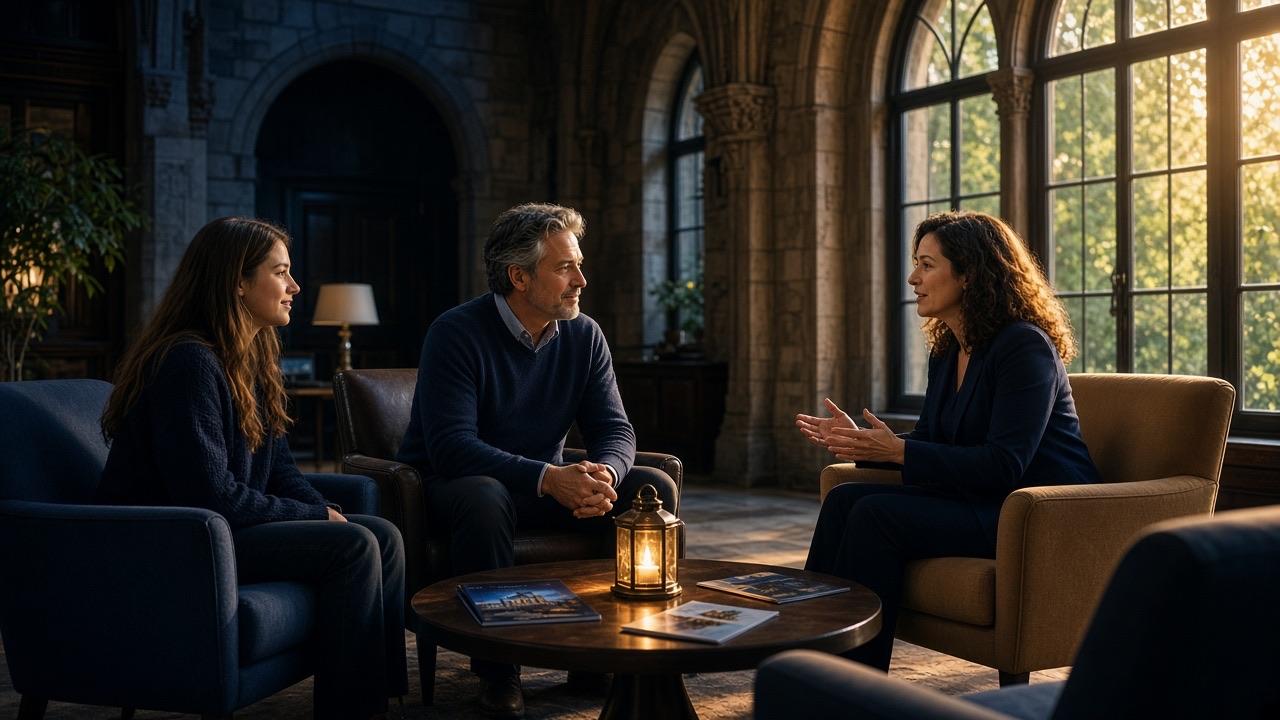
Ask current students what a typical week looks like in their major, ask faculty how undergraduates get involved in research, and ask about internships and co-ops. Our open house program includes academic sessions with faculty from all eight schools.
Next steps
Explore our eight schools, plan a visit, or request information to hear from an admissions counselor. When you're ready, learn about how to apply.
- admissions
- majors
- academics
- prospective students
- advising